
Street and a Half - a social innovation cluster - Why impact matters and clusters work
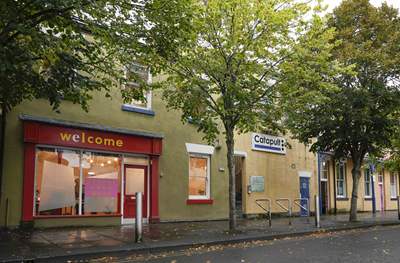
St Helens' Street and a Half (SnA) is the new home for 16 creative and social businesses in St Helens with growth ambitions. Created in partnership by St Helens Borough Council and Kindred, SnA is an example of a social innovation cluster, with office spaces and shops to rent and communal spaces for hire, housing artists, makers and socially-trading organisations.
Article date: 23 March 2026
The social economy is made up of organisations which trade commercially, with social impact at their heart. That includes socially-trading organisations (STOs), cooperatives, impact-driven businesses and community-owned ventures.
Socially-trading organisations are invariably driven by someone with a passion, or a purpose, in the place they are from, something that we know St Helens residents have an abundance of. They set out to solve a problem or realise an opportunity for themselves, their family, or their community. If it's something others want too, and are able and willing to pay for, that's when a business starts trading.
Socially-trading and creative organisations are ambitious and aspirational, changing their communities for the better - so they might tackle health inequities and climate risk, offer access to opportunity, or early years education - using sustainable economic models. And impact is their reason for existing. The social economy exists because traditional systems often leave gaps, which these organisations fill. They deliver economic growth and community wealth in areas that have been unaffected by traditional trickle down or trickle out economics over the last 30 years. Together they:
- Increase access to opportunity
- Reduce inequality
- Build resilient communities
- Protect shared resources
- Give places a unique identity
- Encourage others to start trading
- Harness the passions and ideas of people in St Helens - and across Liverpool City Region - to build a future we all want to live in.
St Helens Borough Council launched its inclusive growth strategy in 2023, placing social value and inclusive growth at the heart of regeneration. The regeneration visible across the town aims to benefit local people, create opportunities for supporting local skills and employment, apprenticeships and training, educational visits, embedding the Real Living Wage within the supply chain and maximise local labour spend.
But inclusive growth isn't just about big buildings, or big companies, or people from other places coming to St Helens with money, or jobs, or big ideas. Inclusive growth is about the peoplewho live in and love St Helens. Their ideas, their ambitions, their passions and purpose. The difference they make and the jobs they create.
Street and a Half was available to let from September 2025 last year. By December it was full. The people and businesses based there - alongside longstanding local favourites Book Stop and Momo's and Café Laziz - are the pioneers of St Helens' emerging inclusive economy. Organisations like Artist-led St Helens, Knotura and Angela Wilkinson Photography are proof of the demand from St Helens residents to test ideas; grow their own businesses; employ friends, families, neighbours, and local people; and make the differences to the communities that they are part of because they see the needs and the opportunities here - up-close and first hand.
As big buildings and big infrastructure is built St Helens will welcome some big businesses from other places who move in and bring jobs and opportunities with them. But there will also be those already trading in St Helens who need new space, or more space, to do more of what we already do. And some will be the social and creative businesses starting out at Street and a Half, who have big ambitions to be a big part of the town's 'inclusive growth' future.
Councillor Kate Groucutt, the council's lead for Business and Inclusive Growth, said: "Kindred does fantastic work across the Liverpool City Region in supporting social businesses that not only provide vital services for the communities they're based in but also giving something back to them too. This fits in perfectly with our Inclusive Growth Strategy and our ambitions for St Helens town centre, where the local community, local residents and local businesses are at the heart of our plans for a thriving, family friendly, welcoming place for people to work and collaborate.
"As regeneration works continue in the town centre, we are aware of the impact for businesses in this area and are working with construction partners to minimise disruption as much as possible, and to remind residents and visitors that businesses remain open and ready to welcome them. It's fantastic seeing this building now at full occupancy and alongside wider private sector investment we're seeing the start of a really exciting and creative, socially trading hub emerging in the George Street Quarter which I hope to see continue to grow in the coming years."
The impact created by STOs is multiplied when socially-trading organisations organise themselves into geographical clusters, rather than working alone. Evidence suggests STOs experience accelerated growth and impact, similar to industry clusters, when we cluster together in a place. This tends to be in areas of low value and market failure as space for growth is both available and initially affordable.
Kindred support, coupled with investment, has a catalytic effect attracting other STOs and businesses, providing confidence and identity. STOs in those areas are anecdotally generating social innovations at a higher rate, or with greater impact, than those operating independently.
Now, social innovation clusters are being established in partnership across the city region, exploring how local authorities can commission the social economy to drive inclusive growth. There is also emerging evidence that areas that have performed well economically have also seen an increase in relative child poverty and other poverty indicators, when compared to areas considered to have performed less well according to government economic indicators. The reasons for this are not singular - but appear to include the strength of the social economy in an area.
At its best, social impact transforms lives and systems. Often the numbers around social impact are huge - headlines around "improving 1 million lives" or "£20 million in impact capital" - but every big idea starts small.
So when organisations talk in huge numbers, they reflect the scale of the problem. But these impact statistics can start to feel less human; less personal. That's why we use stories to reflect how people's lives were changed. Without clarity, big numbers can blur reality instead of illuminate it.
St Helens is not simply growing - it is growing fairly, sustainably and inclusively by unlocking the passion and purpose of its residents. And it is social impact that ensures that growth improves lives, not just creates statistics.